The arrival matters as much as the courtyard
A riad photograph can make a Marrakech booking feel settled before you have looked at the address. Pause at that point. Ask how you will reach the entrance with luggage, where a vehicle can stop, and whether someone will meet you for the final walk. A beautiful room is easier to enjoy when the first evening does not begin with uncertainty about a lane, a doorway and a phone battery.
The Moroccan National Tourist Office describes the medina as a central part of the Marrakech experience, with souks, craft and historic surroundings. Staying within it can place those experiences close to your door. It also makes the exact position of the accommodation important. Compare the route you will actually walk, not merely its straight-line distance from a landmark.
Read a room description for everyday comfort
Ask where the room sits in relation to the courtyard, stairs and communal spaces. If quiet is important, request a clear explanation of likely noise rather than accepting the word peaceful. If you expect to spend time in the room during warm weather, check the actual cooling provision. Travellers who need step-free access should describe their requirements directly and obtain specific answers.
A rooftop, plunge pool or breakfast service can add to a stay, but none should substitute for basics. Establish whether the facilities are shared, when they can be used and what is included in your booking. Compare the whole stay cost, including transfers and any meals you already intend to take there. Avoid paying for a feature you will only see once.
Give the medina a route and a limit
Pick one area or a small number of nearby stops for the first outing. Save your accommodation’s location and an offline route before leaving. Agree on a meeting point if travelling with others. A guided introduction may be useful when you want context for craft, architecture or history; ask the accommodation or visitor service how the guide is arranged and what the outing includes.
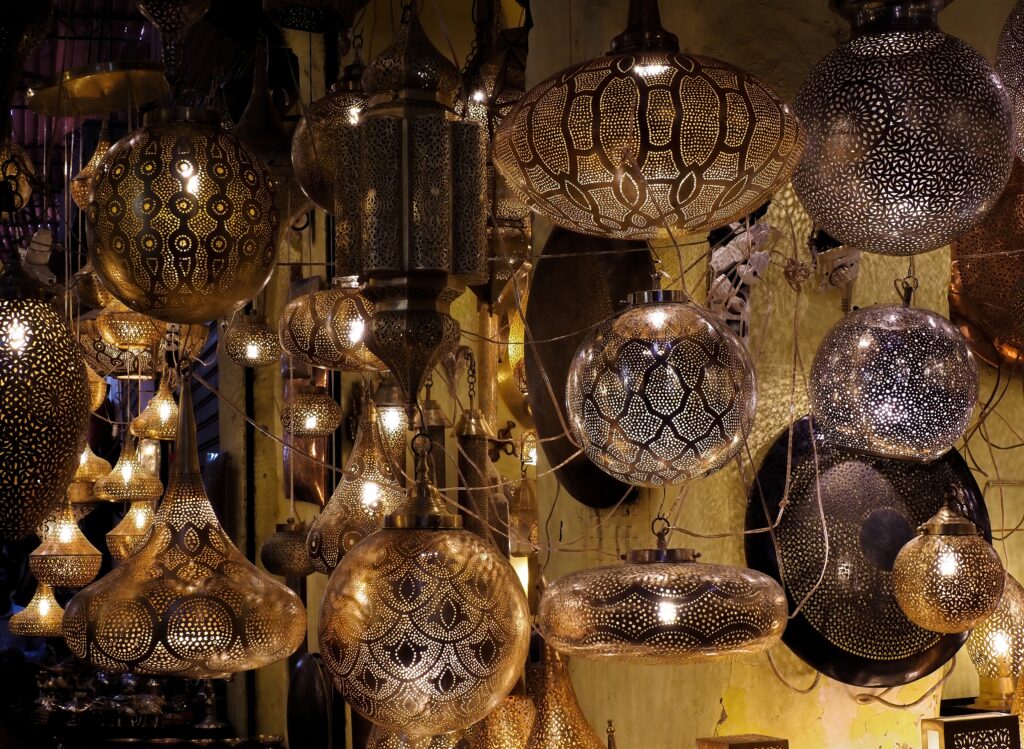
Shopping is easier when you decide what you actually want before entering a negotiation. Set a budget, ask about material and construction, and be prepared to leave without buying. A transportable piece with a clear use at home may be a better choice than a bulky object purchased because the setting made it feel irresistible. Check any import restrictions relevant to the item before committing.
Plan pauses rather than a full day of moving
Choose a convenient place to stop between visits and leave the afternoon adjustable. A slower timetable lets you respond to weather, tiredness and the interests of the group. One booked cultural visit and time to walk can offer more than a sequence of tightly connected appointments.
For meals, discuss allergies and dietary requirements clearly with the establishment. If something is essential, confirm it in advance rather than relying on a general description of the menu. Build a simple alternative into the day so that a closed venue or changed plan does not become a problem.
Keep practical checks current
Before departure, read the FCDO Morocco advice, including entry requirements, safety, local laws and health information. This guide is a planning framework, not a statement that every route, activity or district is suitable for every traveller. Confirm appropriate travel insurance for the activities you actually book.
A medina stay suits visitors who want the city close at hand and are comfortable with the access arrangements of their chosen address. If straightforward vehicle access, fewer walking transitions or a particular accessibility requirement dominates the decision, compare accommodation outside the medina too. Choose the setting that supports your trip, then let the architecture be the pleasure around it.
Source notes: Moroccan National Tourist Office medina information; FCDO Morocco travel advice. Checked 22 October 2026.
More considered stories,
from the Liberad journal.