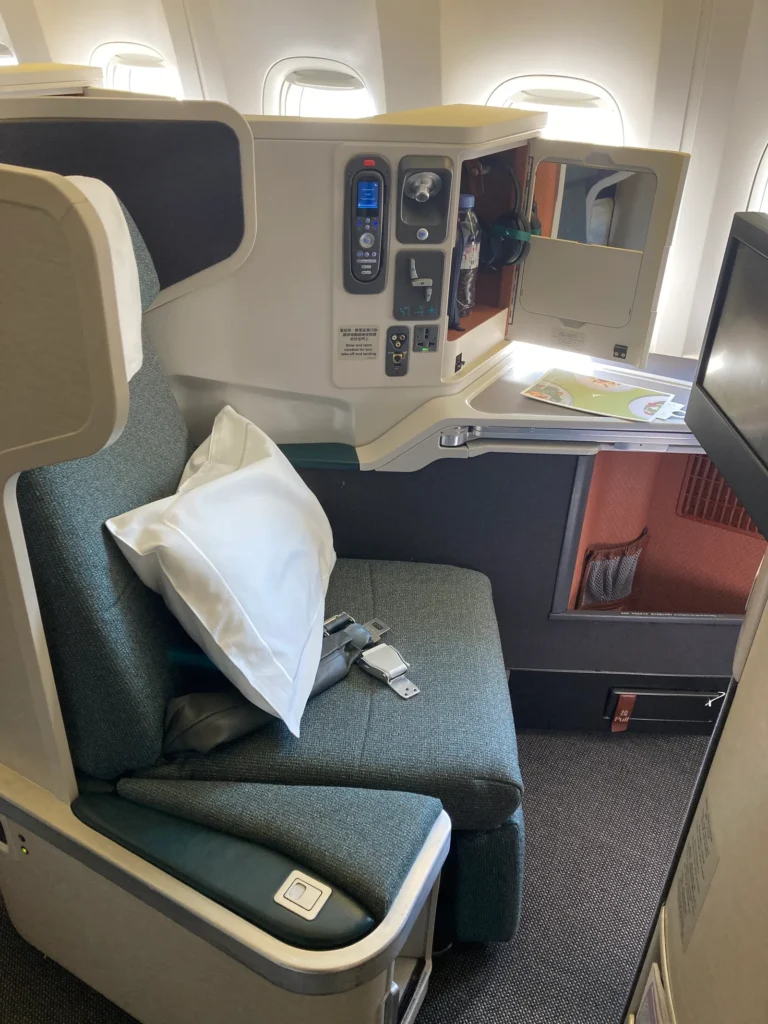
A premium-cabin upgrade can buy something you value: more personal space, an easier airport experience or a better chance to rest. It can also buy details you barely use on a short overnight flight. Start with the business-class seat already available on your itinerary, then identify exactly what the first-class option would change.
Confirm the product on the actual flight
Airline class names do not describe one uniform seat. British Airways, for example, explains that Club World includes distinct seat designs depending on aircraft and route. Check the operating carrier, aircraft information and current seat map for the flight being considered. Understand that an aircraft substitution can still occur.
Keep short-haul business, long-haul business and first class separate. A familiar lounge photograph or the most recent cabin announcement may not apply to your booking. Read the current product information and ask the airline about any essential requirement. Do not pay for a particular feature solely because it appeared in a general campaign.
Work backwards from the purpose of the journey
If sleep is the main priority, examine the seat and bed arrangement, cabin timing and the amount of uninterrupted time realistically available. A late departure and early arrival can leave little time after meals and preparations. Extra dining is not necessarily useful when the aim is to settle quickly.
For a daytime journey, personal space, workspace or travelling together may matter more. Compare the seat arrangement for the people on the booking. A more private suite may be pleasant for a solo traveller and less convenient for a pair who want to talk throughout the flight. The highest cabin does not automatically solve every version of comfort.
Separate ground benefits from seat benefits
List the airport services you would actually use and check eligibility on the itinerary. If a connection is short or you arrive close to boarding, a more elaborate lounge offer may have little practical value. If your existing status already provides a service, do not count it again as a new benefit of the upgrade.
Consider the whole route, including a regional connection and arrival arrangements. A long wait or inconvenient transfer can affect the journey more than a difference between two premium seats. Do not reroute solely for a higher cabin without comparing the extra travel time, connection risk and total cost.
Read the fare and upgrade conditions
A cabin upgrade is not always the same as buying a different flexible fare. Check change and cancellation rules, baggage, seating and what happens if a flight changes. If using points, include the required cash, availability constraints and the value of other trips those points could support. Avoid assigning a universal cash value to a point without considering your own alternatives.
Compare the complete price difference for the people travelling. Put it beside something else you might value during the trip, such as a better-located hotel or an additional night. This is a personal budget choice rather than a calculation that can prove one cabin is always worth it. A special occasion can be a legitimate reason, provided the conditions are understood.
Use a two-column decision
On one side, write what business class already provides on this flight. On the other, write only the additional features first class is expected to provide and mark the ones you will use. Remove duplicate benefits and claims that have not been confirmed. The result is a more honest comparison than a list of everything the airline offers somewhere in its fleet.
Choose the upgrade when those specific differences justify the additional cost to you. Keep business class when it already answers the main need. A satisfying premium journey comes from a well-matched flight and sensible expectations, not from treating the cabin name as a universal measure of the experience.
More considered stories,
from the Liberad journal.