A sharing board becomes difficult when every attractive ingredient reaches the table at once. The cheese crowds the crackers, a knife migrates between toppings and nobody knows which dip contains nuts. A better board begins on a piece of paper, with the guests and the length of the gathering rather than an empty wooden surface.
Decide whether it is a snack or the meal
A few bites before dinner and a board that replaces dinner need different quantities and accompaniments. Tell guests what to expect, then plan the rest of the table around that role. Bread, vegetables and a substantial alternative may matter more than adding a fourth cured meat. Use the number of guests and the other dishes as your starting point, not the dimensions of the board.
Make a short list of dietary requirements before shopping. Keep the original labels for packaged items so ingredient and allergen questions can be answered accurately. If someone has an allergy, discuss a suitable serving arrangement with them rather than assuming that placing their option in one corner prevents cross-contact.
Choose a small set of contrasts
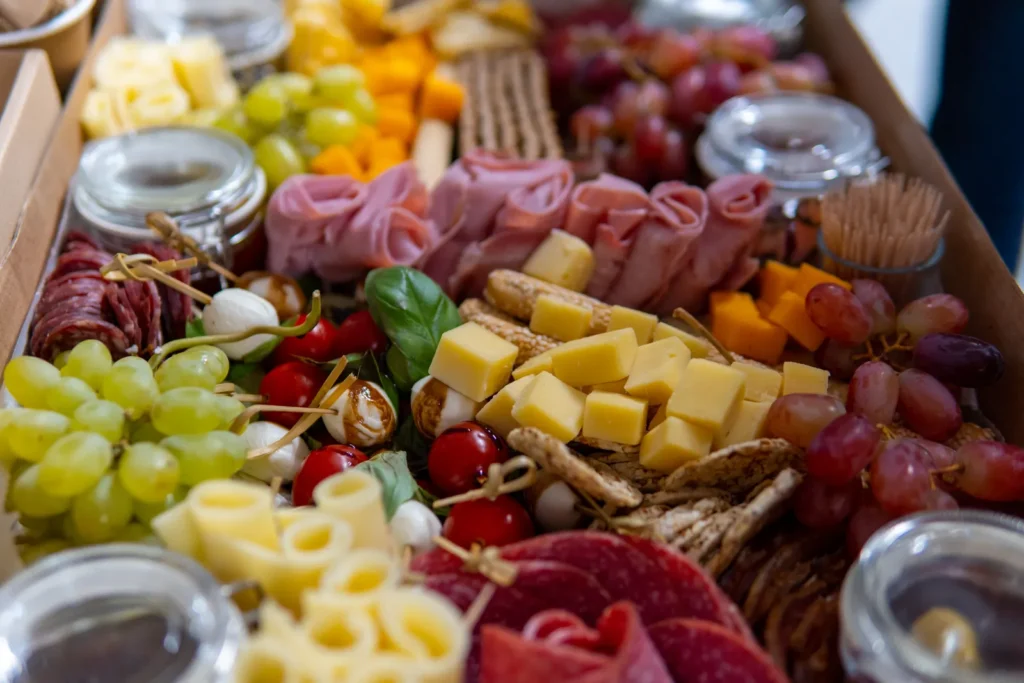
Build around differences in texture and intensity: something firm, something softer, a crisp element and an acidic accompaniment. The exact products depend on what your guests enjoy. Several similar soft cheeses can make a generous-looking board less varied than a smaller, more considered selection.
For cured meats, think about how each will be picked up and eaten. Fold or portion them so guests do not need to pull apart a large stack. Include an alternative that is a real choice for a guest who does not eat meat, rather than decorative fruit around ingredients they cannot share. Keep separate utensils where required.
Design for hands and plates
Put spreads and wet accompaniments in small dishes to keep the crisp elements crisp. Position serving tools beside their food and leave room to use them. A board looks relaxed when people can reach a portion without dismantling the arrangement. If the table is long, two smaller boards can be easier to share than one impressive centrepiece.
Cut a first portion where that makes serving clearer, but avoid cutting everything unnecessarily far in advance. Keep crackers and bread replenishable in a separate container. A small bowl for stones, rind or used picks prevents the finished table becoming confusing. None of these choices needs a specialist serving set.
Keep the chilled-food plan visible to the host
Follow storage and use-by information for each item, and keep chilled food cold until it is needed. The Food Standards Agency warns against buffet food sitting at room temperature for more than four hours. That is not a target to aim for: serving smaller quantities and replenishing from the fridge is often a more manageable approach to a long gathering.
Do not continually add fresh chilled food to a pile that has already been out for some time. Keep track of when dishes reach the table and use clean utensils. Pay attention to warmer rooms, outdoor conditions and the particular food. If storage or timing is uncertain, do not rely on an attractive appearance or smell to settle a safety question.
Let colour come from the food
Use modest groups of ingredients rather than filling every gap with garnish. A few grapes, a sliced vegetable or a small dish of pickles can create contrast while remaining useful to eat. Avoid decorative plants or flowers unless you know they are suitable for food contact and the intended use. A board does not need to resemble a garden to feel generous.
Before guests arrive, walk through serving one plate yourself. Check the reach, tools and information a guest needs. Then put the spare portions back into appropriate storage. The most successful sharing board is the one that allows the host to join the conversation while guests can choose food comfortably and confidently.
More considered stories,
from the Liberad journal.