A good drink at the end of the day need not be a convincing copy of something else. It can be bitter, bright, savoury or gently spiced on its own terms. When choosing a no-alcohol option, begin with the experience you want in the glass and read the numerical information separately from the atmosphere created by the bottle.
Choose a flavour direction first
Decide whether you want a long refreshing drink, a short bitter serve or something to accompany food. That narrows the choice more effectively than a broad promise of sophistication. A citrus-led drink may suit a different meal from a sweet, warming one, and a strong botanical flavour can be appealing without needing to imitate a named spirit category.
Read the serving suggestion before comparing bottles. Some products are concentrated and intended for mixing; others are ready to drink. A bottle that seems expensive beside a soft drink may provide several measured serves, while a large container may be inconvenient if you will not finish it within the labelled period after opening. Compare like with like.
Read ABV, not just the headline
Terms used for low- and no-alcohol products can be confusing, and the Department of Health and Social Care publishes guidance on descriptors. For your own decision, look for the stated alcohol by volume and the complete product label rather than assuming that reassuring wording answers every question. Products sold beside one another may not have identical alcohol content.
If avoiding alcohol entirely is essential for personal, medical, religious or recovery-related reasons, obtain reliable information about the actual product and seek appropriate advice where needed. Do not infer suitability from a cocktail photograph, a retailer’s menu heading or a familiar bottle shape. “Less alcohol” and “the right choice for you” are different conclusions.
Consider the whole ingredient list
Check allergens and any ingredients you need to avoid. A no-alcohol label does not establish that a drink is sugar-free, vegan or suitable for every dietary requirement. If you use a mixer, the final glass also includes that mixer’s ingredients. Compare the suggested serve as a whole rather than judging only the small measured portion of the base drink.
For an evening with guests, keep one straightforward alternative available, such as sparkling water with a garnish people can choose. Do not make the non-drinking guest explain a private reason for avoiding a particular bottle. Offer accurate product information and let the choice remain theirs.
Build the serve around restraint
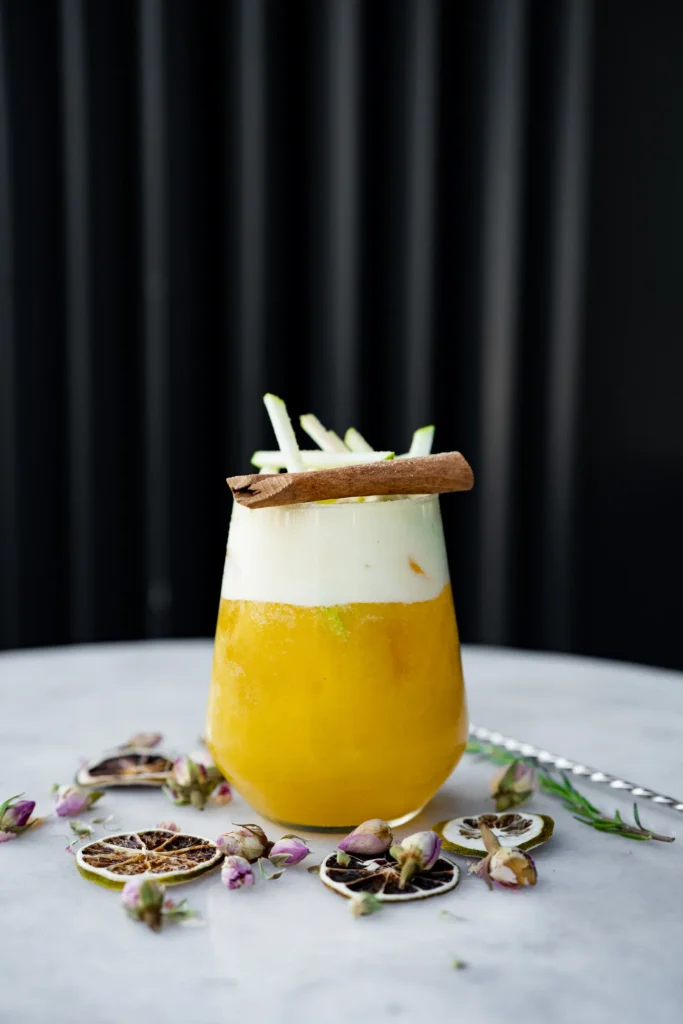
Follow the maker’s proportions as a starting point, then adjust within the product’s directions to your own taste. Too much mixer can hide the character you paid for, while an overlarge garnish can make a simple glass cumbersome. Cold glassware, appropriate ice and a measured pour can make a modest drink feel considered without a collection of specialist accessories.
Choose glassware that is comfortable to hold and suits the volume. A long drink needs room for its mixer and ice; a short serve benefits from a smaller glass. The aim is an enjoyable drink rather than a photograph with ingredients balanced beyond practical reach. If the suggested recipe requires several bottles you would rarely use again, start with a simpler option.
Buy for the next occasion, not a new identity
Try a smaller format or a single serve where available before committing to several full bottles. Note what you liked in plain language: bitter enough with food, too sweet after dilution, or convenient for an early evening. Those observations build a useful shortlist without pretending to be a blind tasting or a universal ranking.
The satisfying choice is one whose flavour, actual alcohol information, ingredients and storage fit your needs. It does not have to persuade you that nothing has changed from an alcohol-led occasion. It only has to be a drink you would choose again for its own character.
More considered stories,
from the Liberad journal.