The important choice happens before the specification sheet
Imagine the photograph you keep missing. Perhaps it is a child moving through a dim room, a street scene framed before anyone notices, or a landscape made slowly from a tripod. Each asks something different of a camera. Leica becomes easier to evaluate when you begin with that situation rather than a red badge or a long list of features.
Leica’s UK camera guide distinguishes the M, SL and Q families, alongside other compact and instant options. The distinction is useful: these are different approaches to taking pictures, not simply steps on one ladder. A camera with a more deliberate operation is not automatically better for a photographer who needs speed.
M: decide whether manual focusing is a pleasure
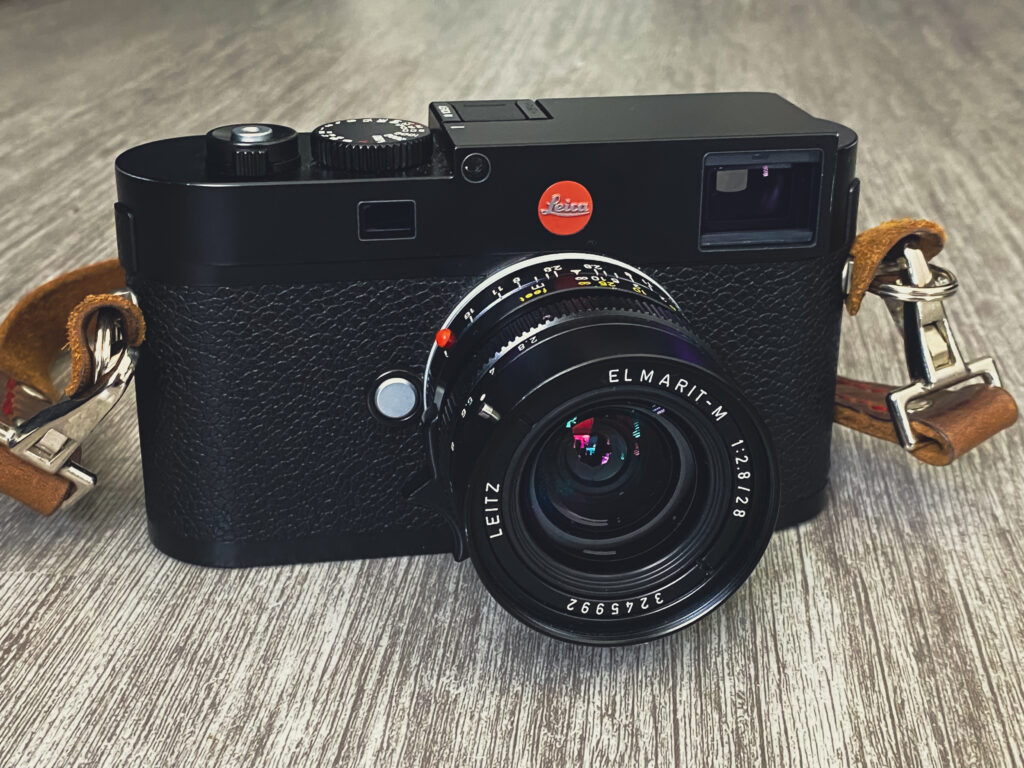
The traditional M rangefinder couples manual focusing with a viewfinder experience that differs from most autofocus cameras. Leica also offers M models with a different viewing arrangement, so check the particular body rather than assuming every M operates identically. The important trial is whether the focusing process suits your eyesight, pace and favourite subjects.
During a demonstration, focus near and far, work in a dim corner and reframe a moving subject. Try the camera with the glasses you normally wear. If the experience encourages you to look more carefully, that may be part of its appeal. If it interrupts the pictures you need, a reputation for deliberate photography will not remove the friction.
Q: accept the lens before admiring the simplicity
The Q family uses a permanently attached lens. Leica’s UK overview describes 28 mm and 43 mm options across the family. Those focal lengths create different habits: a wider view asks you to pay attention to the surrounding scene, while a tighter one changes your working distance. Check the exact model and lens combination.
Walk around with the chosen field of view before deciding. You can practise with an existing camera or phone setting, allowing for the differences between devices. Cropping offers some flexibility, but it does not give you every benefit of changing lenses. The attraction here is reducing decisions; the limitation is accepting the decisions already made.
SL: assess the system you will carry
Leica positions the SL system around mirrorless photography and video with interchangeable lenses. Compare the total weight of a body and the lens you would use most often. A comfortable body on its own tells you little about the complete kit on a long afternoon.
List the work that matters: people in motion, careful still-life photographs, occasional video or demanding commercial assignments. Ask about the current body, lens and accessory combination needed for that work. Existing lenses require a specific compatibility check; do not assume that a shared name or a mount adaptor preserves every function.
Spend time on the unglamorous parts
Open the menus, change a battery, find the card slot and operate the main controls without staring at them. Ask to see how files reach your normal computer and editing software. Large files, unfamiliar controls or an awkward carrying arrangement can matter more often than a feature used once a year.
Budget for the lens, storage, spare power and a suitable carrying method as well as the camera. If considering used equipment, establish the exact model, condition, service history and seller’s terms. Inspect a sample file from the actual camera where possible. A historical product photograph in an article is not evidence of the condition of a unit for sale.
A useful reason to choose Leica
Choose it when the particular camera’s working method improves the kind of photography you want to make, and the complete system fits your budget. Keep looking if you are mainly hoping the purchase will create a photographic habit on its own. A slower or simpler tool can support attention; it cannot replace time spent making pictures.
Sources: Leica UK: Our Cameras; Leica UK: System Cameras. Checked 22 October 2026. Product ranges and service terms can change.
More considered stories,
from the Liberad journal.