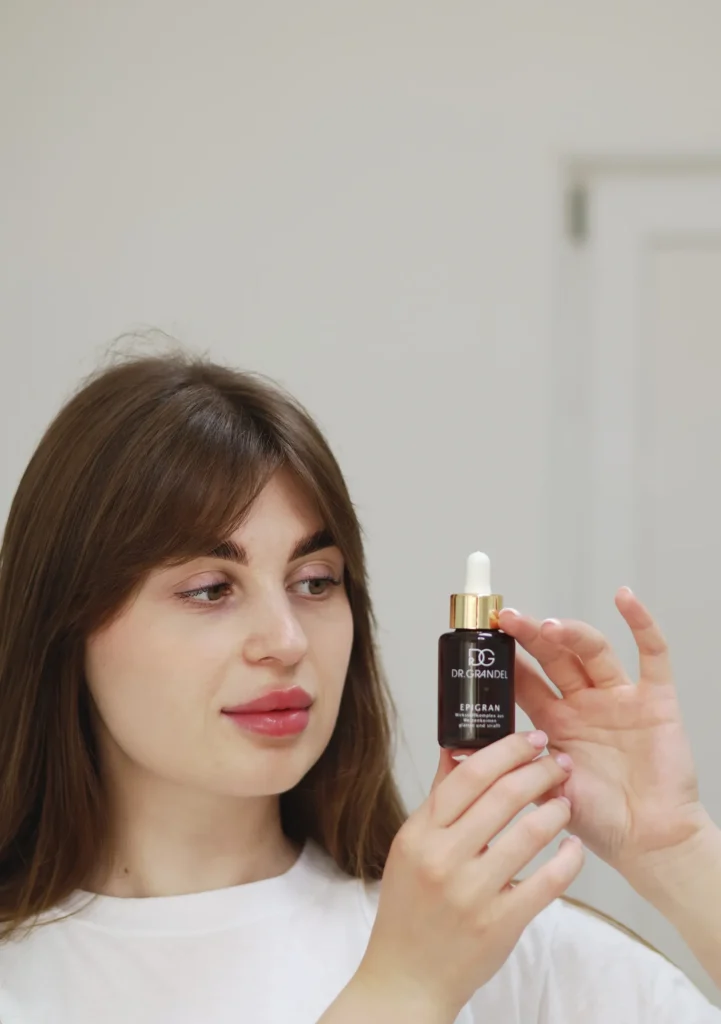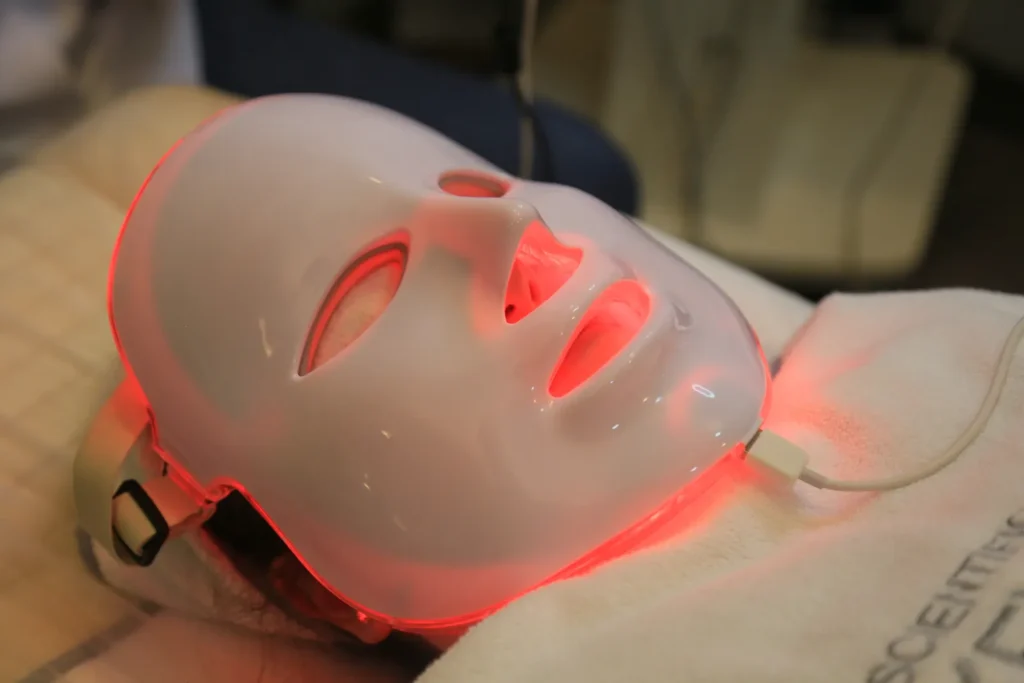
A glowing face mask makes its technology look obvious. In reality, a photograph cannot establish the light source, dose, intended use or evidence for the device inside it. Before comparing colours, treatment schedules or prices, obtain the full product name and the manufacturer’s technical and safety information.
Do not treat every light device as the same treatment
LED masks, low-level lasers and professional procedures are different categories. The American Academy of Dermatology explains that red-light devices sold for home use can differ from the more powerful equipment used in clinics. Evidence about a supervised treatment cannot simply be transferred to a mask sold online, and a red glow alone does not identify a device as a laser.
An LED mask used during a professional treatment illustrates the format, but does not establish what a home-use model can do. If a listing leaves the technology or intended purpose unclear, resolve that missing information before the purchase rather than inferring it from a dramatic before-and-after photograph. Obtain the actual model name and the instructions supplied for home use.
Read evidence at device level
Ask whether a study concerns the exact model, a related product or a different treatment setting. Note who participated, what the comparison was and what outcome was measured. An improvement reported under one protocol is not a promise of the same result from a different light source or schedule. A technical wavelength figure by itself is not a complete assessment of a device.
The AAD notes that research across home devices is difficult to compare and that more evidence is needed. That uncertainty matters when the cost is substantial. Make room in the decision for a modest result, the time required and the possibility that the device does not justify its price for your concern. Do not use social-media popularity as a substitute for a readable explanation.
Suitability comes before a treatment calendar
Discuss the idea with a qualified dermatologist, particularly if you have a skin condition, pigment concerns, a history of light sensitivity or use medicines that could affect suitability. The right question is whether the exact device is appropriate for you, not whether light masks are broadly described as fashionable or gentle. This article cannot make that individual assessment.
Obtain the actual instructions before ordering if possible. Check age restrictions, excluded conditions, cleaning and eye-protection requirements. Do not replace specified protective equipment with ordinary sunglasses. A device whose full directions cannot be located is difficult to assess, however persuasive its product photographs may be.
Count the practical commitments
Consider fit, weight, how the mask is held in place and whether the controls can be operated comfortably. Ask how it is cleaned, what components need replacing and how faults are handled. A routine that requires a place, charging arrangement or amount of uninterrupted time you cannot reliably provide may not suit you.
Compare the full purchase terms, not only a discounted price. Confirm the seller’s identity, local support, warranty conditions and how returns apply to an opened personal-care device. A vague satisfaction promise is less useful than clear written conditions. Keep the product reference and instructions so future support questions concern the actual model.
A decision that allows for uncertainty
Consider a device only after the technology, evidence and personal suitability are clear enough to assess. Follow the maker’s directions without increasing session length or combining treatments on your own. If the purchase relies on the expectation of replacing professional advice or delivering a guaranteed transformation, pause. An optional beauty device should earn its place through a credible, specific case rather than the brightness of its presentation.
More considered stories,
from the Liberad journal.