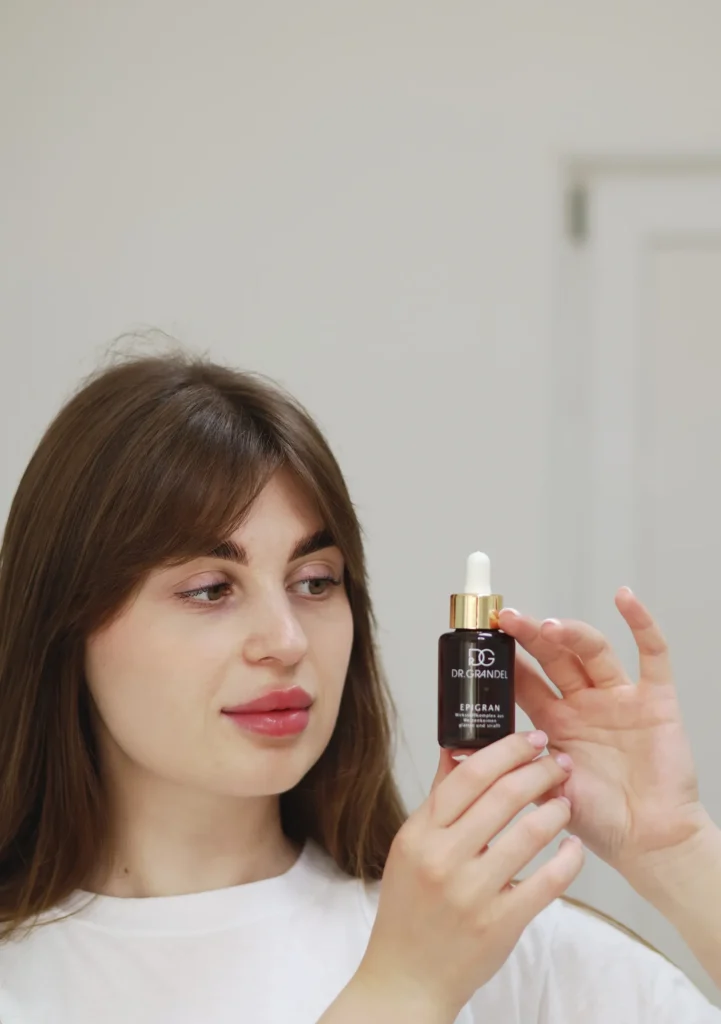
The bottle you like may carry a bunny, a leaf, a vegan statement and a line about natural ingredients. Those marks do not all answer the same question. Before replacing a familiar cosmetic, decide what you want to verify: the origin of its ingredients, the animal-testing policy, or a different concern such as packaging or suitability for your skin.
Ingredients and testing are separate checks
The Vegan Society distinguishes vegan suitability from a cruelty-free claim. An animal-testing statement does not by itself establish that a formula contains no animal-derived ingredients. Equally, a short vegan statement should lead you to its scope and criteria rather than being treated as proof of every ethical or environmental attribute.
Write the two questions separately when researching: “Does this exact product meet the vegan standard I want?” and “What testing policy or certification applies?” A whole retailer, a parent company, a brand and one product line can be different subjects. Avoid transferring a statement about one to the others without reading the explanation.
Check the product, not a remembered reputation
Use the full product name, shade and current formulation. A brand can have a mixture of products, and a claim about a selected collection does not establish that everything in its catalogue qualifies. The Vegan Society maintains a trademark search that can help check registered products and holders. Treat that as a verification tool rather than assuming every item shown near a recognised logo has the same status.
If a claim matters to the purchase but is unclear, ask the manufacturer a narrow question and keep the written response. An ingredient name may not disclose its source in everyday language. Rather than guessing from how botanical the name sounds, ask whether the formula and relevant processing meet the specific standard being claimed.
Keep performance and suitability in the comparison
A vegan label does not tell you whether a foundation shade matches, whether a shampoo suits your hair, or whether a fragrance will irritate you. Compare those practical questions separately. Read usage directions and any warnings in the same way you would for another cosmetic. “Natural”, “clean” and “vegan” should not be translated into “cannot cause a reaction”.
For a product you use every day, start with the job the existing one performs well. A replacement foundation might need the same undertone, finish and wear context; a lip product may need a format you can apply without a mirror. A sample or a careful shade check can prevent a values-led purchase from becoming an unused item in the drawer.
Change the routine at a manageable pace
You do not need to replace every product at once to begin making more informed choices. Keep a list as items run low, then verify alternatives for those specific roles. This gives you time to compare and avoids opening several unfamiliar formulas together. It also helps separate a genuine need from a retailer’s suggestion that an entirely new routine is required.
If packaging is another priority, examine that claim independently: the material, components and local disposal route matter. A formula’s vegan status does not establish that its pump can be recycled in your local collection. Nor does a refill automatically suit your habits if you will not retain the container. Ask for the detail that changes your decision.
Keep a short, current record
Save the exact product reference, the certification or statement checked and the date. Recheck after a reformulation or a significant packaging change rather than relying indefinitely on an old recommendation. The useful outcome is a small set of products that match your requirements and work in your routine, supported by specific information instead of a cluster of reassuring symbols.
More considered stories,
from the Liberad journal.