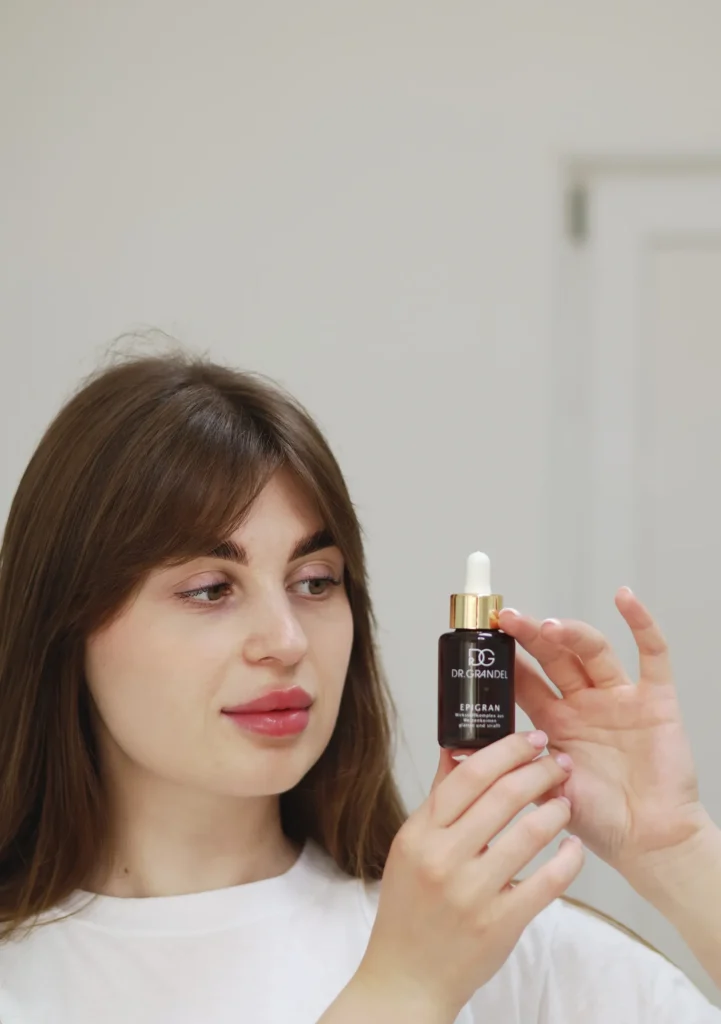
A peptide on the front of a bottle can sound like a precise promise. The useful detail is usually further down the page: which ingredient is involved, what was measured, and whether the evidence concerns the formula being sold. For a reader choosing an additional serum, those questions matter more than treating every peptide product as one category with one proven result.
One ingredient name does not describe a complete product
Peptides are a broad family of molecules, and a cosmetic formula contains more than its highlighted ingredient. University of Miami Health System’s dermatology commentary describes peptide products as possible additions whose formulation matters, rather than miracle treatments. That is a sensible limit for a shopping decision: an ingredient’s interesting mechanism does not automatically establish the size of a visible effect from a particular bottle.
Read the exact claim. Hydration, the appearance of fine lines and the treatment of a medical skin condition are different propositions. A product can feel pleasant or leave skin looking temporarily smoother without proving a long-term structural change. Conversely, a modest, clearly described cosmetic benefit may be enough for your purpose. Decide which outcome you actually want before comparing marketing language.
Look for the finished formula in the evidence
If a maker mentions a study, check whether it tested the product, an ingredient blend or something applied in a laboratory setting. Note how many people took part, whether there was a comparison, and how results were measured. A participant questionnaire answers a different question from a controlled clinical assessment. Neither should quietly become a guarantee that every user will see the same change.
Do not transfer results from an oral supplement, an injected treatment or a different concentration to a topical serum. Likewise, a headline percentage may describe the proportion of participants who agreed with a statement rather than the amount by which a feature changed. If the underlying explanation is unavailable, treat the claim as unresolved instead of filling the gap with an assumption.
Check whether you need another step
The American Academy of Dermatology places sunscreen and moisturiser at the foundation of choosing products for signs of ageing and encourages realistic expectations. Before adding a serum, look at whether the products you already use suit your skin and routine. A new layer should have a clear role rather than compensate for a complicated collection you cannot use consistently.
Compare the texture, fragrance information, packaging and instructions of the complete formula. A product chosen for a comfortable moisturising effect has to work under your usual sunscreen or make-up. Consider whether you prefer one multifunctional product or a separate step. The more expensive option is not automatically better suited to that practical preference.
A small assessment plan
Keep a note of the specific concern, the product name and the maker’s directions. Introduce new products cautiously and follow their instructions, rather than adding several unfamiliar active products at once. If your skin is sensitive, you have a diagnosed condition or you use a prescribed treatment, ask a qualified clinician which changes are appropriate. Persistent irritation is a reason to seek advice, not a sign that a cosmetic must be working.
For a fairer personal comparison, keep photographs consistent in light and distance if you choose to take them. Do not compare a flattering evening image with a close morning picture under harsh light and attribute the difference to one ingredient. Your own observations can help you decide whether you enjoy a product, but they are not a clinical trial and should not be presented as evidence for everyone else.
When to buy, and when to pause
A peptide formula may be worth considering when it offers a clearly described cosmetic purpose, a format you will use and evidence you can understand at an acceptable price. Pause when the attraction depends on a promised transformation, a study that cannot be located or the suggestion that one fashionable ingredient can replace an entire routine. An informed decision can be to keep the simpler products that already suit you.
More considered stories,
from the Liberad journal.