A silk blouse can look effortless on a hanger and demanding by Thursday morning. The question is not whether silk deserves a place in a wardrobe in the abstract. It is whether this particular fabric, cut and care routine suit the way you dress. Begin with the label, then give the finished garment a more practical examination.
Two words that describe different things
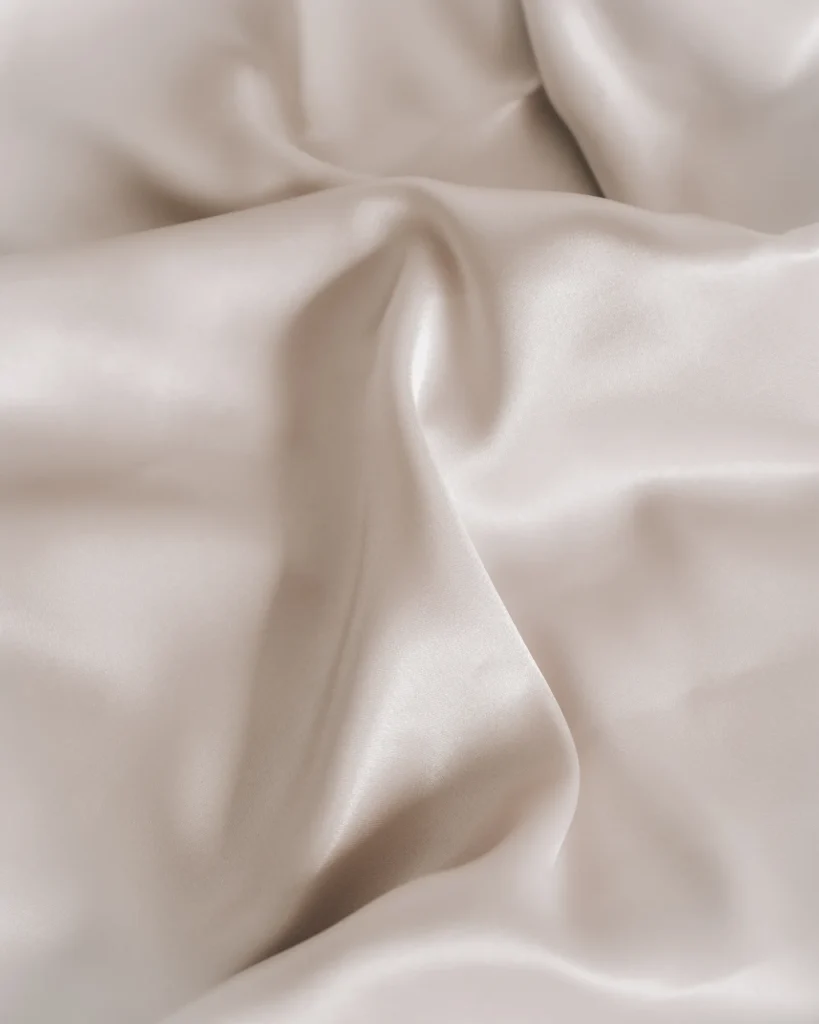
Silk names a fibre; satin describes a weave with a smooth, lustrous surface. A satin garment can contain silk or a different fibre, and a silk garment need not have a satin finish. Read the composition rather than translating shine into quality. A blend may be an intentional choice for stretch, structure, price or care, but the proportion should be clear.
The visible result also depends on weight and construction. A light blouse, a lined slip skirt and a scarf have different jobs. Hold the fabric against the sort of light in which you will wear it and check how much an underlayer shows. With a skirt, examine both the fabric at rest and what happens when it stretches over the hip. A lining may solve one problem while adding warmth or changing movement.
Use movement as the fitting-room test
For a blouse, fasten the collar and cuffs, reach forward and sit down. Check for pulling between buttons and whether the hem stays where you want it. Try it with your usual bra and the actual trousers or waistband you plan to wear. A size that looks neat while standing still may offer too little room during a normal day.
A bias-cut piece needs time to settle on the body, so examine the seams and hem without tugging it into an idealised shape. Look for twisting, uneven tension and an uncomfortable fit at the armholes. These observations are more useful than assuming a higher price automatically means better drape. If alteration is necessary, ask a competent alteration specialist about feasibility before committing.
The label has the final word on cleaning
GINETEX explains that care symbols describe the treatment permitted for the finished article. Do not decide a wash temperature, iron setting or drying method solely from the word silk. A garment’s dye, trim, lining and construction can matter. Read the individual label and ask the seller for written clarification when its instructions are missing or ambiguous.
Plan where the garment will dry and how it will be stored before it arrives. Do not assume a hand-wash label means the process is quick, or that a steam appliance is suitable for every finish. An ornate detail, glued trim or embellished surface can introduce another constraint. If you want a piece for frequent travel, include the practical cost of keeping it presentable away from home.
Three purchases with three different priorities
For a work blouse: favour an opaque-enough finish, comfortable arm movement and a neckline that behaves under your jacket. A slightly less fluid fabric may be easier to wear than a very light one that needs continual adjustment.
For an occasion skirt: check the lining, seam position and movement with the shoes you will wear. Sit on a chair rather than only studying the mirror. A smooth silhouette is a matter of the whole outfit, not the fibre name alone.
For a scarf: think about scale, edge finishing and how it sits when tied. A beautiful large square may overwhelm the coat or bag you bought it to accompany. Try the actual knot rather than judging the print flat.
Pay for the role, not an imagined return
“Investment” is a loose fashion description, not a promise of resale value or longevity. Compare the purchase with a fabric you already wear happily. If silk gives the movement, colour and finish you want and you accept the care, it can be a satisfying choice. If you need something washable at short notice for daily commuting, another material may serve you better. The successful garment is the one whose requirements you understand before the first wear.
More considered stories,
from the Liberad journal.