Describe the walk before choosing the harness
A pavement circuit, a muddy woodland walk and a technical mountain outing put different demands on a dog’s equipment. Start with the routine you do most often. If most days involve a local walk and a lead, the useful questions are about fit, adjustment and everyday handling. A list of specialist features is only valuable when one answers a need you can identify.
Ruffwear’s UK harness guide separates everyday designs from more specialised equipment. That is a better way into the range than assuming the largest harness is the most suitable. Write down the problem with your current set-up: awkward fitting, an unsuitable attachment position, excessive bulk or a genuine need for a support handle. If the current harness works well, a new colour alone is a preference rather than a functional upgrade.
Visit Ruffwear’s official UK website ↗
Padding and minimal coverage are different choices
The Front Range is presented as a padded everyday harness with four adjustment points and lead connections at the back and chest. Hi & Light takes a more minimal approach. The comparison is not simply comfortable versus uncomfortable: coverage, handling and the shape of an individual dog affect the choice. Treat the manufacturer’s description as a starting point for an actual fit check.
A dog that dislikes a particular putting-on process may need a different closure arrangement rather than more padding. If your own hands find small clips difficult, consider how you will fasten them on a cold morning. Have the lead and any coat available when trying the harness so that you can check the combination you actually intend to use.
A pack answers a different question
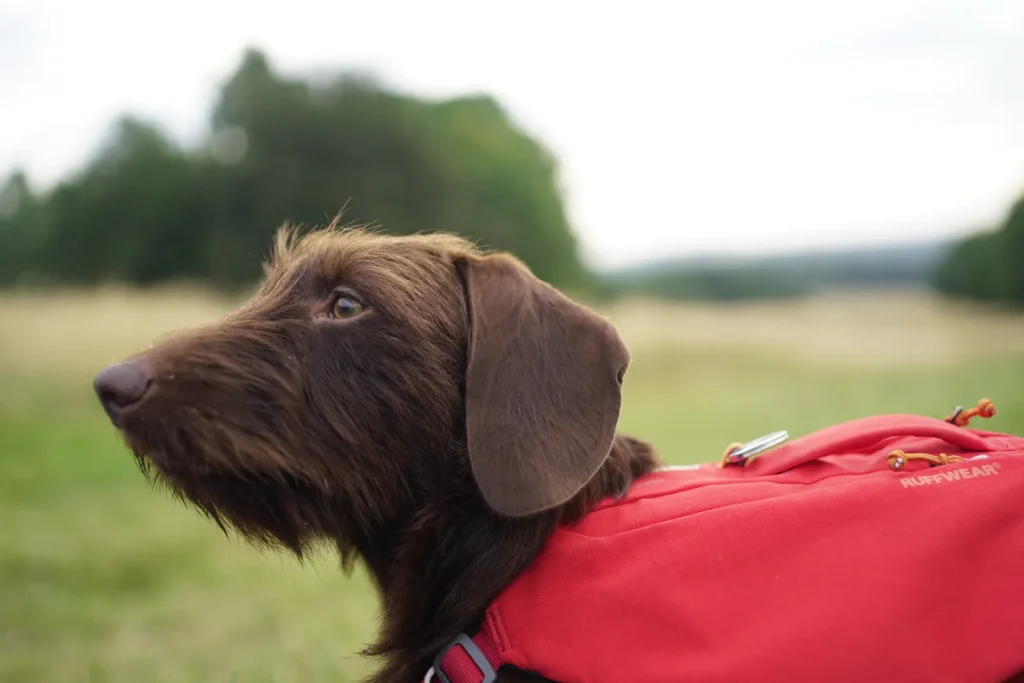
Ruffwear also offers dog packs, illustrated by the branded pack in this article’s photograph. Storage is a separate feature from an everyday harness’s fit and lead attachment. If you only need a comfortable local-walk set-up, a pack may add bulk without solving the original problem. For an activity where carrying equipment is genuinely relevant, read the instructions for that exact pack and establish whether that use is appropriate for your dog. Seek professional advice if health or physical ability creates uncertainty; this guide does not prescribe loads or assume that every dog should carry one.
A handle needs a purpose
Some Ruffwear designs offer a handle and additional body coverage. Those features may be relevant to a particular activity, but they should not become an invitation to lift a dog in ways the product is not designed to support. Read the instructions for the exact harness and ask the manufacturer if your intended use is unclear.
Do not treat an everyday walking harness as a certified vehicle restraint, a climbing system or medical support equipment. A brand may sell specialist products in those categories, but that does not transfer their intended use or testing to every item in the range. A dog with mobility, pain or breathing concerns needs advice appropriate to those circumstances.
Measure, adjust, then watch movement
Ruffwear’s fitting information directs buyers to measure around the widest part of the rib cage and use the chart for the particular product. Start there rather than choosing by breed label alone. A size used in another brand is not a reliable conversion. If the dog falls between sizes, contact the seller with the measurements before ordering.
Try the product indoors under supervision, following the maker’s fitting instructions. Observe standing, walking and turning; look for shifting, rubbing or a position that restricts ordinary movement. Keep tags and packaging until you have checked the retailer’s return conditions. A successful first fastening is not the whole fit assessment, especially for a growing dog or one with an unusual body shape.
Choose a routine you can maintain
Mud and wet weather make cleaning instructions relevant to UK use. The Front Range product information specifies hand washing with mild detergent and air drying. Check the instructions for whichever product you buy, allow drying time and inspect attachment points, webbing and fasteners regularly. Replace or seek advice about damaged equipment rather than relying on the reputation of the original purchase.
For an ordinary walking routine, favour the simplest harness that fits correctly and addresses your actual handling needs. Choose extra coverage or specialist features because the activity calls for them, not because technical language sounds reassuring. A careful fit check and appropriate use matter more than the number of features on the label.
Visit Ruffwear’s official UK website ↗
Source notes: Ruffwear UK harness comparison and Front Range product information; Ruffwear fitting guidance. Checked 22 October 2026. Specifications vary between products.
More considered stories,
from the Liberad journal.